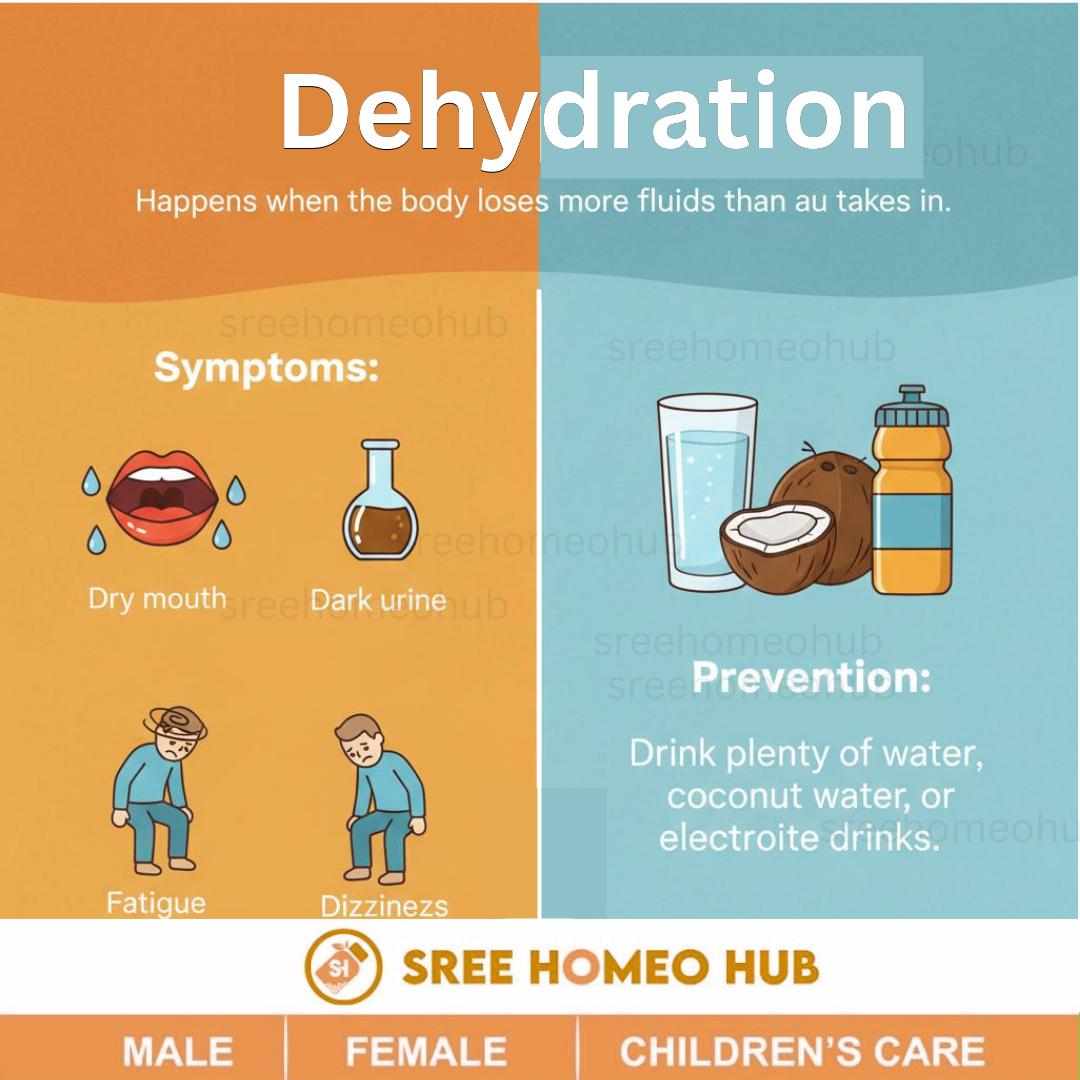
Dehydration is a preventable yet potentially serious condition that occurs when the body loses more fluids than it receives. If left untreated, it can lead to complications such as kidney problems, electrolyte imbalances, and shock. Recognizing early warning signs and maintaining adequate fluid intake are essential steps in protecting overall health. With proper hydration habits and timely medical care when needed, most cases of dehydration can be effectively managed and avoided. Heat-related illnesses – such as heat exhaustion or heatstroke due to poor temperature regulation. Urinary tract infections (UTIs) – concentrated urine encourages bacterial growth. Kidney stones – inadequate fluid intake allows mineral crystals to form. Kidney failure – prolonged dehydration reduces blood flow to the kidneys. Electrolyte imbalance – abnormal sodium and potassium levels may cause muscle cramps, irregular heartbeat, or seizures. Hypovolemic shock – a life-threatening drop in blood volume that leads to dangerously low blood pressure and organ failure. Severe Dehydration Symptoms Severe dehydration is a medical emergency and requires immediate attention. Symptoms may include: Extreme thirst Very dry mouth and cracked lips Little or no urination Dark brown or amber-colored urine Rapid heartbeat and breathing Low blood pressure Sunken eyes Confusion or irritability Fainting or unconsciousness
Story
Severe Dehydration Symptoms You Should Never Ignore


















Write a comment ...